RPM and CPM: Read the Denominator Before the Number
CPM and RPM describe different quantities. Before comparing them, check whose money is being counted, which revenue streams are included and what appears in the denominator.
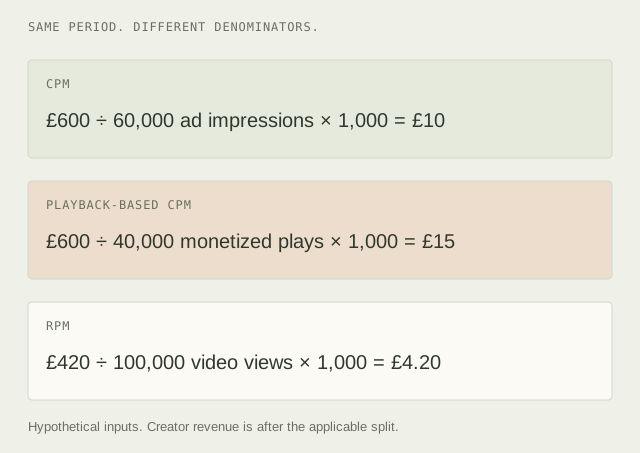
Correction: the earlier version confused CPM with playback-based CPM and said RPM must always be lower. This revision uses the metric definitions and keeps the revenue calculation explicitly hypothetical.
Three definitions that should stay separate
YouTube's ad-revenue analytics documentation defines the relevant metrics. For ordinary videos, the distinction is:
| Metric | Numerator | Denominator |
|---|---|---|
| CPM | Advertiser cost before the creator revenue split | 1,000 ad impressions |
| Playback-based CPM | Advertiser cost before the creator revenue split | 1,000 monetized playbacks |
| RPM | Included creator revenue after the revenue split | 1,000 video views, including non-monetized views |
More than one ad impression can occur during a monetized playback. Multiplying an impression-based CPM by monetized playbacks silently assumes one impression per playback; that assumption may be wrong.
Shorts use engaged views for the RPM denominator. Keep Shorts and ordinary-video definitions separate when reading your reports, and check the current documentation before comparing formats.
Why the values differ
RPM can include multiple reported revenue sources, such as eligible ad revenue, YouTube Premium and fan funding. CPM focuses on advertiser cost. Views with no ad still enter the ordinary-video RPM denominator, and creator revenue is measured after the applicable platform share.
Those differences explain why a displayed RPM is often lower than CPM. They do not make CPM a universal upper bound on all revenue per thousand views: the numerators and denominators differ. A sponsorship paid outside YouTube also does not automatically appear in Studio RPM. Read the documented inclusions and exclusions before using the number as a business-wide revenue measure.
A hypothetical calculation
Consider an invented reporting period with 100,000 ordinary-video views and £420 in included creator revenue after the platform share. Those are illustrative inputs, not a benchmark for any niche.
RPM = £420 ÷ 100,000 × 1,000 = £4.20.
Now suppose the same example has 60,000 ad impressions across 40,000 monetized playbacks, with advertiser cost of £600. The impression-based CPM is £10. The playback-based CPM is £15. The different values come from the denominators, not a contradiction in the data.
The £420 creator-revenue input is deliberately separate. This example does not derive it from an assumed universal revenue share or imply that all formats and income streams use one split. Use the actual report for the applicable product and period.
A worksheet for investigating a change
- Match the reporting scope. Record date range, currency, format and whether the figures are estimated or final.
- Inspect both parts of RPM. Did included revenue change, did views change, or did both change?
- Break down revenue sources. A change in memberships can affect overall RPM without proving that advertisers paid more for each impression.
- Check monetization and audience context. Review the reports available to you instead of assuming that seasonality or geography explains the entire movement.
- Write what remains unknown. A ratio summarizes results; it does not isolate their cause.
Use a sensitivity table, not a forecast
If you want to plan, calculate several hypothetical revenue-and-view combinations and label them as scenarios. Holding £420 constant while changing views to 120,000 produces £3.50 RPM. Holding 100,000 views constant while changing revenue to £500 produces £5 RPM. These are arithmetic examples, not predictions of demand or earnings.
Keep money earned outside the reported sources in a separate business record. Do not add it to Studio RPM without renaming and defining your own metric. That distinction makes month-to-month comparisons easier to audit.
Which number should a creator watch?
Use RPM to describe included revenue relative to views, CPM to inspect advertiser cost per impression, and playback-based CPM for the monetized-playback denominator. No one number explains the entire business. Total revenue, costs and the work required for a video answer other questions.
The original YouTube metric definitions are the reference for this explanation. The calculations above are YTGrid's hypothetical examples. This is metric education, not a forecast or individual financial advice.
How to Build a Sponsorship Rate Card You Can Actually Defend
Stop pricing from a formula you read on Twitter. Build a rate card from your own delivery data, with the maths for integrations, dedicated videos, usage rights and exclusivity spelled out.
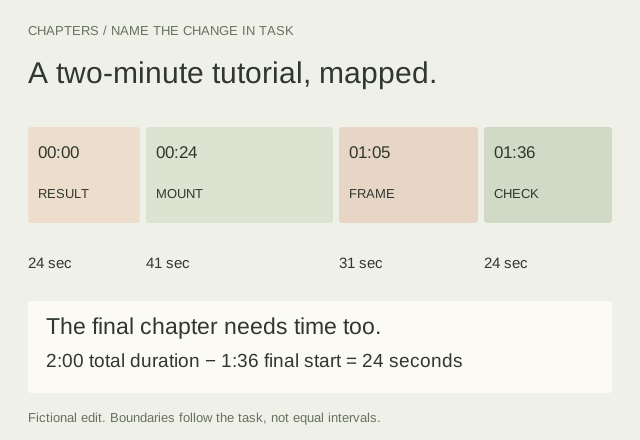
Plan Useful Chapters for a Finished Video
Map a two-minute edit, name the changes in task and check the final chapter as carefully as the first. Includes a blank chapter worksheet.
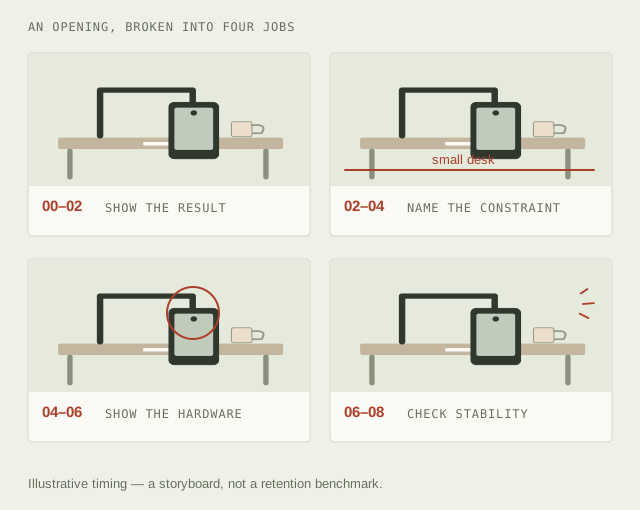
Build a Shot List Around What Each Image Needs to Do
Turn a viewer promise into a visual sequence. A fictional fourteen-second plan connects framing, audio, purpose and estimated runtime.